

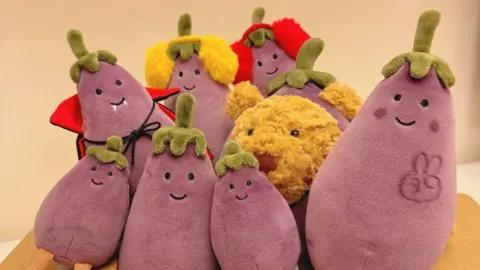
Stella Huang purchased her first Jellycat cuddly companion amid a period of unemployment in the pandemic. Prompted by an acquaintance's enthusiasm for the UK-created creatures, her curiosity was truly captured when she saw an adorable gingerbread cottage plushie on a major social networking app.
While Christmas isn't traditionally observed across China, acting more as a commercial event than a religious festival, the sight of gingerbread houses appealed with her. "It doesn't hold much to me... However, I always like the appearance of gingerbread houses," she explains. This led her to eventually ask a friend from her hometown to purchase the item on her behalf.
That acquisition occurred back in 2021, just as the brand was on the cusp of achieving massive success in China and beyond. "People were jittery, and nobody knew what exactly would happen," says Stella, who developed a routine of petting and hugging her soft toys to cope throughout a difficult period. Residing in Beijing, a city with among the strictest lockdowns in the world, she passed a great deal of time indoors.
Now 32 and working as a tourism sector in the tourism industry, Stella continues to expand her collection. It has grown to around 120 items, with a total a cost of roughly 36,000 yuan. "As an adult, you have numerous matters that you cannot discuss with others... and the troubles we encounter are a lot more complicated than before," she notes with a sigh. "These soft toys assist me in managing my emotions."
Initially created with kids in mind, these squishy creatures have become an international phenomenon, especially within China where a increasingly disenchanted youth demographic has been seeking solace in them as a source of comfort and solace.
The Rise of Kidults
Her gingerbread cottage toy belongs to their "Amuseable" line, a set of toys with tiny expressions based on commonplace inanimate objects, from toilet rolls to boiled eggs. These items have become the "standout products" that "resonate with a wide younger adult audience" globally, according to market observers.
The surge in appeal "could have a connection to a desire to feel companionship," suggest cultural commentators. While it's difficult to ascertain if the introduction of the now-iconic Amuseable line in 2018 was an intentional strategy to engage the adult market, companies in the sector are under pressure to must cultivate alternative audiences amid declining birth rates across numerous countries.
The brand made its foray into the Chinese market back in 2015. By laying the necessary "foundation", the toy maker was able to capture "the mood of the pandemic"—when people sought comfort during heightened anxiety—and built on its early momentum there, according to industry experts.
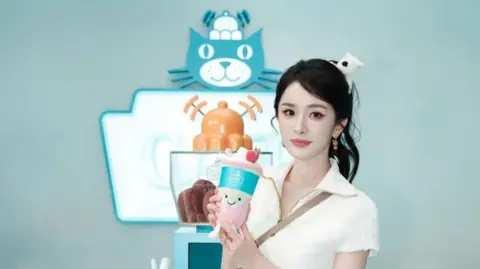
Jellycat's fame was further boosted by creative temporary events. These retail activations sometimes offered a menu of exclusive "culinary" products. Many enthusiasts record themselves being served and post the clips on social platforms.
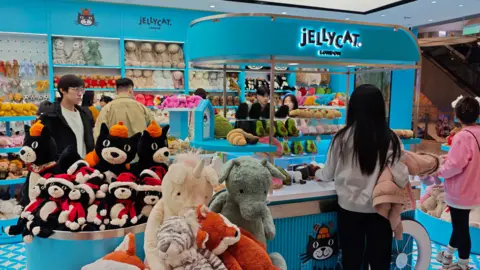
Localisation proved to be a core strategy. As an example, customers were able to buy plush interpretations of traditional UK dishes such as fish and chips during a pop-up overseas. Conversely, products including teapot and teacup toys were sold at exclusive outlets in Beijing and Shanghai last year.
In 2024, the British firm's sales is said to have rose significantly to an impressive figure. During the same timeframe, it sold roughly $117 million worth of toys to Chinese consumers on leading online marketplaces, according to research estimates.
This growth mirrors a broader surge in China's collectable-toy market driven by adult consumers in search of emotional comfort and connection. Overall sales from collectible toys in China are expected to top 110 billion yuan this year, as per a 2024 industry report.
The runaway popularity of other toys such as Labubu, elf-like dolls by domestic company Pop Mart, highlights the country's growing appetite for collectable toys. The so-called "adult-child" trend is not exclusive to China; young adults worldwide are increasingly question "outdated understandings of what it means to be an adult," note academics.
Particularly, items like the aubergine character—affectionately dubbed "the boss" in China—have also spawned a wave of memes, where users sharing grievances about the pressures of adulthood. The "aubergine boss" tag serves as a platform where fans sketch different expressions on their toy, showing it in different states from drinking to fake-smiling.
For example, one Hong Kong-based, Wendy Hui, modified her aubergine Amuseable by drawing dark circles under its eyes and putting a pair of glasses on it. She posted a picture online captioning it: "The mental state of employees on Monday." "I kept working from home even on time off," the 30-something says. "I merely intended to express how exhausted I was."
Thus, Jellycat has become a surprising, light-hearted channel for China's youth to air their frustrations over a slowing economy, where hard work doesn't always guarantee comparable rewards. Despite heavy online censorship, the internet have become a crucial, perhaps the primary, space for such discussions.
The brand's frequent releases of limited-edition designs coupled with the retirement of certain lines—a strategy sometimes referred to as "hunger marketing" in China—has also driven {


